


Happy Glass
Rating:
4.30
Played:
14,531
A Physics Puzzle That Feels Instantly Readable
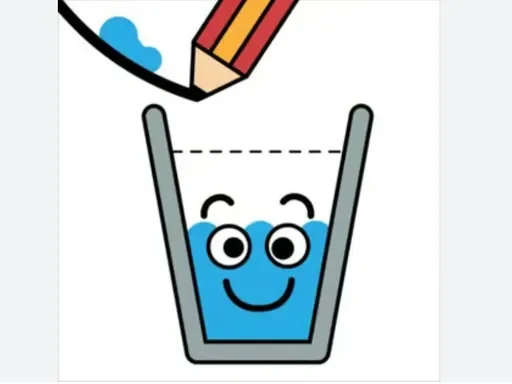
At a glance, Happy Glass looks almost too simple: an empty cup with a sad face, a water source above it, and a gap between the two. Then the level starts, you draw a line, the water moves, and the whole puzzle becomes about angles, momentum, and tiny mistakes. That clarity is why the game has lasted across mobile stores and browser portals for years.
The browser version on this site keeps that loop fast. You open the page, sketch your idea, and find out within seconds whether the plan really works. If you are curious about the wider web presence around Happy Glass, the official game site also shows how naturally the concept fits browser play, but the core appeal stays the same everywhere: guide enough water into the cup to reach the line and turn its expression from sad to happy.
That simple transformation gives every stage a small emotional payoff. It also hides a clever design trick. The game does not ask you to memorize long rule lists. Instead, it lets gravity, shape, and timing teach you the system through immediate feedback.
How a Typical Level Unfolds
Most stages begin with three clear elements: the faucet or water source, the glass, and a set of obstacles that break the direct route between them. Your tool is the line you draw with a mouse or touch input. That line can become a ramp, a guardrail, a funnel, or a stopper. Once the water starts flowing, your drawing turns into part of the level geometry, which means every curve and endpoint matters.
Some puzzles look open but are actually strict. A line that is too long can waste ink, make the water bounce, or send drops outside the glass. Other puzzles reward a more creative approach, where a short hook near the source does more than a giant wall near the cup. Because the simulation is visible, you can usually see why a failure happened right away.
That is what makes Happy Glass feel fair. Even when a stage is difficult, the mistake usually appears on screen instead of staying hidden. Fast restarts turn those mistakes into information rather than frustration.
Playing Smoothly in Your Browser
On the current site, the game runs directly in the browser, so there is no long install process before you start solving stages. That matters because the fun comes from repetition and quick experimentation.
Desktop play usually feels the most precise. Click and drag to draw your line, then watch the water react. On a phone or tablet, touch controls still fit the design well because the main action is basically sketching. Since many puzzles can be solved with surprisingly little ink, rushing often produces extra shapes that make the route worse instead of better.
If you are new, read the level from top to bottom before drawing. A calm scan of the first drop, the main obstacle, and the landing zone often saves several failed attempts.
Controls, Habits, and Better Decisions
Use the shortest useful line
Happy Glass rewards efficiency. In many versions, drawing less helps you earn better results, and even when score is not your main concern, shorter lines are easier to control. They leave more room for the water to settle naturally and reduce accidental ricochets.
Think about the first contact point
Players often focus on the cup, but the beginning of the stream is just as important. If the first drops hit the right slope, the rest of the flow usually follows. If they hit a blunt edge or a steep wall, the stream can split apart immediately.
Do not crowd the rim
It is tempting to build a fortress around the glass, especially after a few near misses. The problem is that the opening still needs a clean entry path. Too much structure around the rim can create splash-back and waste the final drops you needed to clear the stage.
Change one variable at a time
When a solution almost works, resist the urge to redraw everything. Shorten one end, soften one angle, or move one support point. Small revisions help you understand the level's physics much faster than starting over with a completely different idea every time.
Common Mistakes That Cost Easy Wins
The most common beginner error is drawing for decoration instead of function. A pretty looping shape may look inventive, but the game usually prefers a practical slope or a compact barrier. Another frequent mistake is reacting too late to a visible flaw.
There is also a psychological trap in stages that seem close to solved. After two or three near successes, players often add more line to "guarantee" the win. That extra material can actually create a new collision point and ruin what was almost the correct answer. In Happy Glass, more structure does not automatically mean more control.
A better habit is to ask one question after every failed attempt: what single moment caused the loss? If you can identify that moment, the next line usually becomes much easier to design.
Where the Game Came From and Why It Traveled So Well
Happy Glass is widely associated with Lion Studios on mobile storefronts, and reference databases such as MobyGames list an August 14, 2018 release window for its early mobile launch. It arrived during a period when quick, visually clear puzzle concepts spread rapidly through app stores, short videos, and browser portals.
The premise was perfect for that environment. You could understand a level in a second, show a failed solution in a few more, and immediately want to test a cleaner answer. The smiling glass gave the game a recognizable identity, while the draw-to-solve mechanic kept the levels flexible instead of rigid. Browser versions extend that same strength, which is why the game still works so well in short sessions.
That mix of accessibility and experimentation is why Happy Glass still feels modern. It is casual enough for a quick break, but thoughtful enough to reward patience and observation.
Frequently Asked Questions
Is Happy Glass free to play in a browser?
Yes. Browser versions of Happy Glass are typically free to start, and this site lets you jump into the puzzle loop without installing a separate app first.
What kind of game is Happy Glass?
It is a physics drawing puzzle. You draw lines that interact with gravity and moving water, trying to guide enough liquid into the cup to pass each stage.
Who made Happy Glass?
Official mobile listings commonly credit Lion Studios, and the game became widely known through mobile distribution before spreading across browser portals and web game sites.
How do I control Happy Glass on desktop and mobile?
On desktop, use the mouse to click and drag your line. On mobile or tablet, tap and drag with your finger. The action is simple, but precision still matters.
Why do short lines often work better than long ones?
Short lines are easier to place, less likely to create awkward rebounds, and better at guiding water with small, intentional adjustments instead of oversized barriers.
What should I do if the water keeps missing the cup by a little?
Look at the first place the stream touches your drawing and adjust that point first. Many near misses come from an early angle problem, not from the final section near the cup.





Comments
Loading comments…